

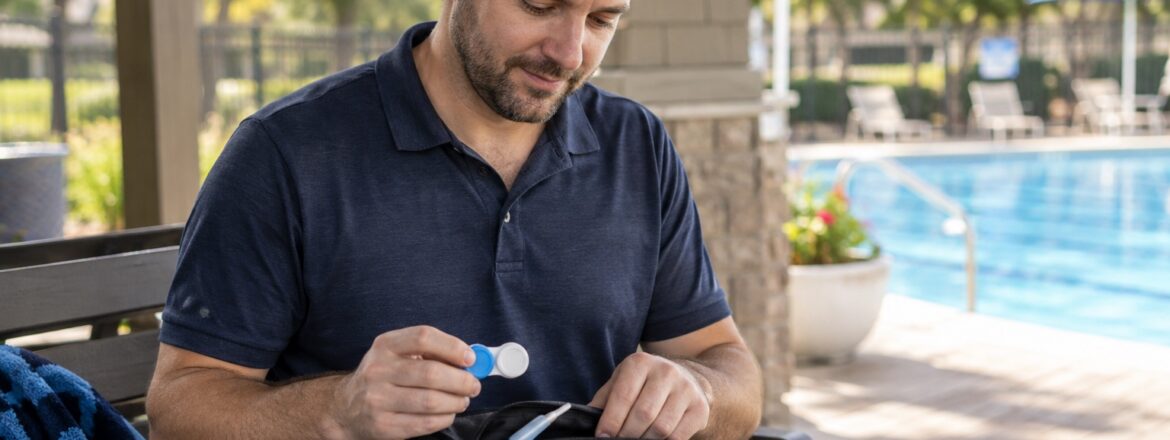
Do not routinely sleep, shower, swim, or use a hot tub in scleral lenses, and keep every lens, case, applicator, and care step away from tap or recreational water. Sleeping and water exposure reduce the safety margin and can increase the risk of a serious corneal infection. Rare overnight therapeutic use is a separate, closely monitored medical protocol—not permission for ordinary sleeping in a scleral lens.
These rules apply even when the water looks clean and the lens feels comfortable. Tap, bottled, distilled, pool, lake, ocean, and hot-tub water are not sterile filling or care solutions. Use the prescribed sterile products and wearing schedule for your device.
Why water and contact lenses are a risky combination
Water can carry bacteria, fungi, and free-living microorganisms. One particularly serious organism is Acanthamoeba, which can cause a painful, difficult-to-treat corneal infection. Drinking-water standards do not make water sterile enough for contact-lens care.
A lens can trap contaminated fluid or microorganisms near the cornea. The Centers for Disease Control and Prevention and U.S. Food and Drug Administration advise contact-lens wearers to avoid water exposure, including showering, swimming, hot tubs, rinsing, and storage in water.
Can you shower with scleral lenses?
No. Remove scleral lenses before showering. Closing the eyes does not create a reliable seal, and spray, mist, soap, or shampoo can still reach the lens and ocular surface. A case-control study identified showering in contact lenses as a significant risk factor for contact-lens-related microbial keratitis.
Plan insertion for after the shower. Wash hands with a lotion-free product and dry them completely with a lint-free towel before handling the device. Do not let a wet sink, faucet, or countertop touch the lens or application tools.
Can you swim in scleral lenses?
The safest answer is to remove them before entering a pool, lake, river, ocean, or water park. Chlorine does not make a pool sterile, and natural water can contain many organisms. A tight scleral lens is not a watertight swimming goggle.
Ask about prescription swim goggles or another non-contact-lens correction if clear vision is needed in the water. Do not assume goggles over a scleral lens eliminate the risk. If a special circumstance makes removal difficult, discuss an individualized plan before the activity, not after exposure.
Hot tubs carry an additional exposure concern
Remove contact lenses before using a hot tub or spa. Warm water can support microbial growth, and splashes or steam can reach the eye. Keeping the head above water does not reliably prevent exposure.
Never use hot-tub, pool, or shower water to rinse a lens, case, or plunger. If your care setup has been splashed, move to a clean, dry area and replace or disinfect items according to professional and product instructions.
Can you sleep or nap in scleral lenses?
Routine sleeping and napping in scleral lenses are not recommended. Closed-eye wear changes oxygen conditions and limits the normal opportunity to remove, clean, and inspect the device and eye. Studies across contact-lens modalities consistently associate overnight wear with greater microbial-keratitis risk.
Remove the lens before sleep even after a long day. If you accidentally doze off, do not panic or force a dry, tight-feeling lens from the eye. Wake fully, assess symptoms, follow the removal technique you were taught, and contact the fitting office if removal is difficult or the eye remains abnormal.
Why some medical scleral devices are worn overnight
In exceptional cases, a corneal or ocular-surface team may prescribe an extended-wear therapeutic protocol because the anticipated benefit outweighs risk. Such care can involve specific devices, medications, disinfection procedures, frequent replacement or cleaning, and close examinations.
This is not ordinary elective wear and cannot be started independently. Instructions given to another patient with a different disease are not transferable. Unless your own treating team has explicitly prescribed and monitors overnight use, treat your scleral lenses as waking-hour devices.
What if water accidentally touches the lens?
Remove the lens as soon as it can be done safely. Do not simply dry the outside and continue wearing it. Follow the prescribed full cleaning and disinfection process before reuse; if the product instructions or your fitting plan call for replacement after exposure, follow that guidance.
If water entered the filled bowl during application, discard that fluid and start over with a clean lens and fresh sterile preservative-free filling solution. Do not use tap water to rinse away tap water. The scleral lens filling versus cleaning solution guide explains the correct product roles.
Never use tap, bottled, or homemade water-based saline
Only use the sterile filling product prescribed for the reservoir. Bottled drinking water and distilled water are not sterile contact-lens solutions, and adding salt at home does not produce a safe or correctly balanced product. Saliva is also unsafe.
Use fresh solution, observe vial or bottle handling instructions, and do not touch the opening to fingers, tools, the lens, or another surface. Clean and disinfect the lens with its approved system. Eye Freedom’s scleral lens overview explains how the fluid reservoir differs from an ordinary soft contact lens.
Keep the case and tools dry and clean
Cases, application stands, plungers, mirrors, and towels can become part of a contamination pathway. Follow the exact cleaning, air-drying, replacement, and storage instructions supplied for each item. Avoid keeping the setup beside an open toilet or in a wet shower area.
Wash hands before handling, then dry them completely. Clean surfaces and avoid lotion, makeup, and lint transfer. The step-by-step guide to inserting and removing scleral lenses covers a controlled setup and common mistakes.
Plan safe vision for travel, sports, and emergencies
Carry current glasses when they provide usable backup vision, enough sterile filling vials, the approved cleaner and disinfectant, a clean case, and spare tools. Do not decant products into unsterile containers. Airline, camping, and remote-work plans should account for clean hand washing and complete drying.
For water sports, ask whether prescription goggles can meet the visual need. If occupational exposure is possible, protective eyewear and a written response plan may be appropriate. Do not extend the daily schedule into sleep simply because removal is inconvenient; review how long scleral lenses can be worn each day.
Symptoms after water or overnight exposure
Remove the lens and seek same-day eye care for increasing pain, marked redness, discharge, strong light sensitivity, sudden or substantial blur, or a new white or cloudy corneal spot. Tell the clinician about the exact exposure, the water source, sleeping, and all products used.
Do not self-treat a red, painful eye with leftover medication, and do not reapply the lens to see if symptoms settle. Some infections can worsen quickly. Early evaluation is particularly important for eyes with transplants, epithelial defects, reduced sensation, severe surface disease, or immune suppression.
Daily habits that protect the eye and the lens
- Remove the lenses before showering, bathing, swimming, hot tubs, and sleep.
- Wash and completely dry hands before every application and removal.
- Fill only with the prescribed sterile preservative-free solution.
- Clean, rinse, disinfect, and store exactly as directed; never top off old solution.
- Keep cases and application tools away from water and replace them as directed.
- Attend follow-up even when vision and comfort seem good.
Healthy habits support the results of a well-designed device. Learn why the physical relationship is reviewed over time in why custom scleral lens fitting matters.
Frequently asked questions
What happens if I accidentally sleep in my scleral lenses?
Remove them when safe, without forcing a tight or dry lens. If the eye has pain, redness, discharge, light sensitivity, persistent blur, or a white spot, seek same-day care. Tell the fitting office even if repeated accidental sleep has seemed harmless before.
Are waterproof goggles enough for swimming in scleral lenses?
No goggle creates a guaranteed sterile seal. Removing the lenses before swimming is safest. Ask about prescription goggles or an individualized alternative rather than assuming goggles cancel the water-exposure risk.
Can I rinse a scleral lens with distilled water?
No. Distilled water is not an approved sterile contact-lens care or filling product and has been associated with unsafe water practices. Use only the specific sterile solutions and care system prescribed for your lens.
Can I wear scleral lenses in the rain?
Normal incidental outdoor rain is different from intentionally showering or swimming, but avoid direct water in the eyes. If contaminated water reaches the lens or reservoir, remove it when safe and follow the prescribed cleaning and disinfection response.
Request an individualized care review
Eye Freedom can review your wear schedule, products, handling setup, travel needs, and what to do after an accidental exposure. Bring every lens, case, tool, and solution. Request a consultation; urgent symptoms require same-day eye care rather than an online form.
Medical references
- Centers for Disease Control and Prevention: Keeping water away from contact lenses
- U.S. Food and Drug Administration: Contact lens risks
- PubMed: Water exposure and the risk of contact lens-related disease
- PubMed: Personal hygiene risk factors for contact lens-related microbial keratitis
- PubMed: Risk factors for microbial keratitis with contemporary contact lenses
This article is for education only and does not replace the wear and care instructions for your prescribed device or an eye examination. New infection warning signs require prompt professional care.
