7800 SW 87 AVE SUITE B-270 MIAMI, FLORIDA 33173

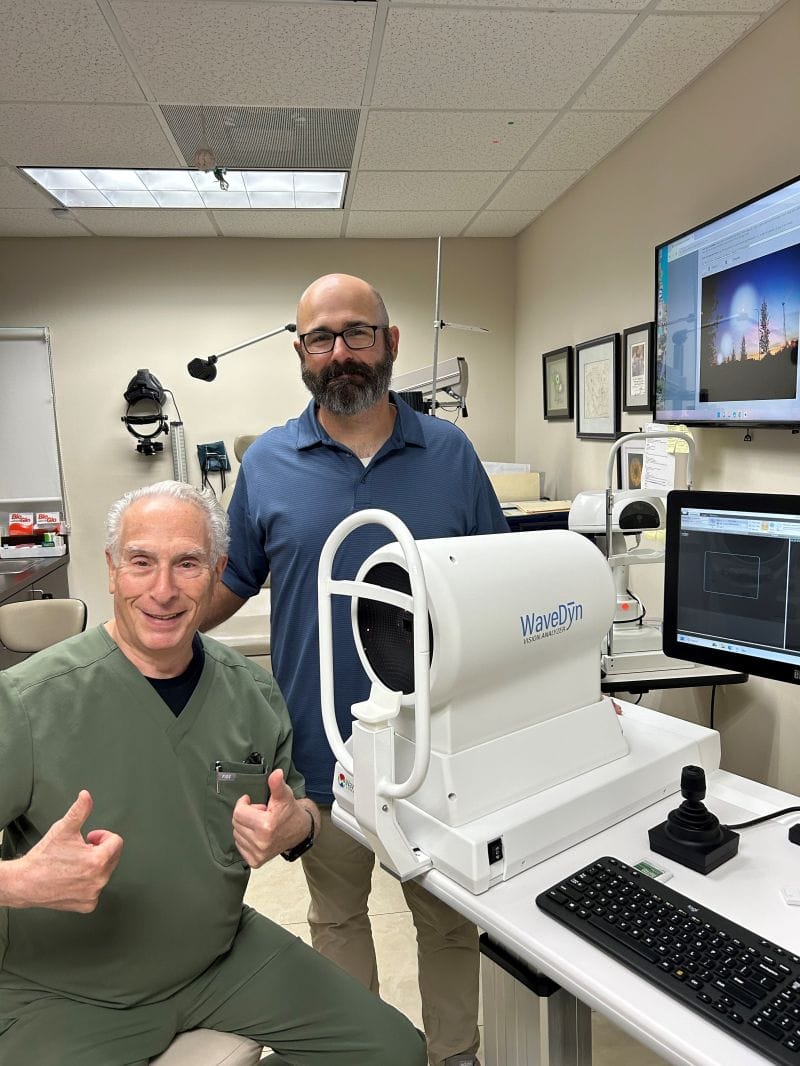
The WaveDyn Vision Analyzer is a diagnostic platform that records a series of optical measurements rather than relying only on a single static reading. Dr. Edward Boshnick uses its findings together with refraction, corneal imaging, ocular surface examination, and on-eye scleral lens assessment.

The instrument can help characterize how optical measurements vary over a short period, but it does not independently diagnose every eye condition or guarantee a particular lens result.

What Is the WaveDyn Vision Analyzer?

WaveDyn uses wavefront-sensing technology to evaluate the eye’s optical system. Instead of presenting only one measurement, it can capture repeated data that may show variation related to blinking, tear-film behavior, accommodation, pupil changes, or fixation.

Dynamic information can be useful when a patient’s vision fluctuates or when static acuity does not fully explain glare, halos, ghosting, reduced contrast, or inconsistent refraction. The results still require clinical interpretation.

What Does WaveDyn Measure?

  • Wavefront aberrations: lower- and higher-order optical distortions measured across the pupil.
  • Objective refraction: instrument-based estimates of refractive error that are compared with subjective refraction.
  • Changes over time: repeated readings that may reveal variability during the measurement period.
  • Pupil information: pupil size and its relationship to the measured optical pattern.
  • Visual simulations: representations that may help explain measured image quality but do not predict an outcome.

No single instrument replaces corneal topography or tomography, OCT, slit-lamp examination, tear-film assessment, retinal evaluation, or the patient’s experience.

How It Supports Custom Scleral Lens Evaluation

For a patient wearing or being evaluated for scleral lenses, Dr. Boshnick may use WaveDyn data to compare optical performance before and through a lens, investigate a changing prescription, or identify repeatable residual aberrations.

The physical scleral lens fit remains essential. Clearance, scleral landing, centration, rotation, settling, surface quality, and the fluid reservoir can all influence visual performance. Wavefront-guided optics are considered only after a sufficiently stable lens platform and ordinary prescription factors have been addressed.

What Patients Can Expect During Testing

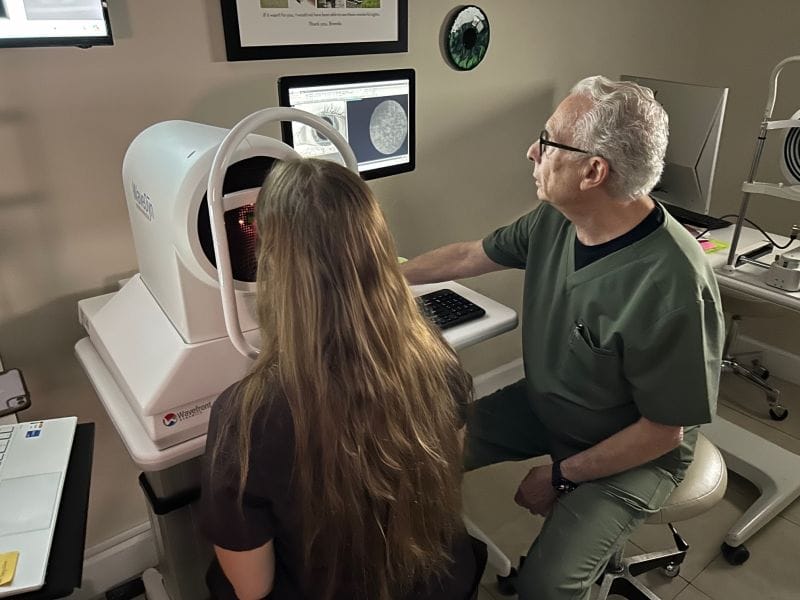
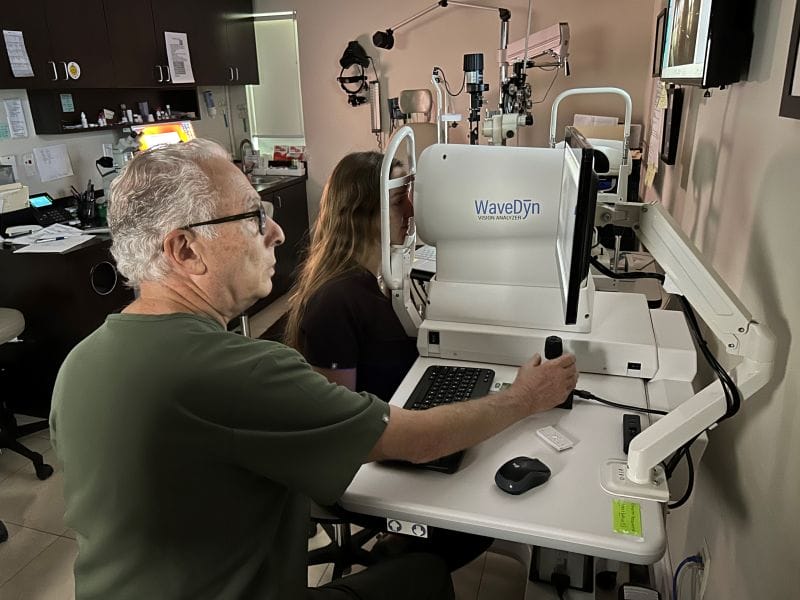
The test is generally noncontact. The patient looks into the instrument, follows a fixation target, and blinks normally when instructed while a sequence of readings is captured. Dr. Boshnick may repeat the test under different conditions or through a settled scleral lens.

Bring current and prior lenses, available lens parameters, surgical records, corneal imaging, and notes about when vision changes. Tear-film quality, lens wear time, lighting, and recent lens application can affect the interpretation.

How Dr. Boshnick Uses the Results

Dr. Boshnick correlates WaveDyn findings with the patient’s symptoms and the rest of the examination. The purpose is to identify a clinically meaningful problem, not to choose a technology based on a measurement alone.

Read about wavefront aberrometry, wavefront-guided scleral lenses, and the broader custom scleral lens fitting process.

Medical sources

Frequently Asked Questions

It records repeated optical measurements that can help characterize refraction, wavefront aberrations, pupil behavior, and short-term variability. Dr. Boshnick interprets the data with the complete examination.
A standard refraction asks the patient to compare lens choices to refine a prescription. WaveDyn provides objective and repeated optical measurements. The two methods complement rather than replace each other.
It may help evaluate optical performance through a scleral lens and identify repeatable residual aberrations. The instrument does not determine physical fit, which must be assessed separately on the eye.
No. Many patients do not need customized wavefront optics. Candidacy depends on symptoms, repeatable measurements, ocular health, and whether the scleral lens remains sufficiently stable.
No. It is one source of diagnostic information. A complete evaluation may also require refraction, corneal imaging, ocular surface assessment, lens evaluation, and other testing.

Important Limitations

WaveDyn measurements do not guarantee better vision, comfort, or candidacy for a specific lens. Results can vary with fixation, blinking, tear-film quality, pupil size, lens position, and other conditions. Testing must be interpreted by a qualified eye-care professional.

This page is educational and does not replace an eye examination, diagnosis, or individualized treatment plan.

Schedule Your Consultation with
Dr. Boshnick