![]() |
||
|
Dr. Edward Boshnick |
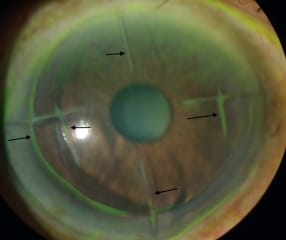
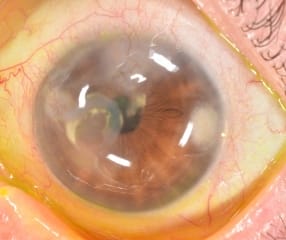
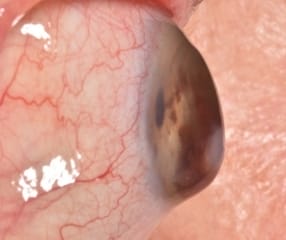
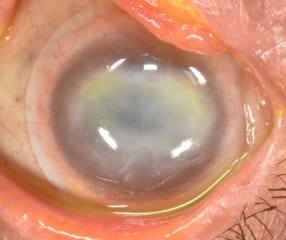
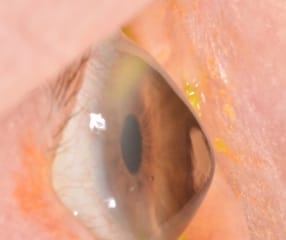
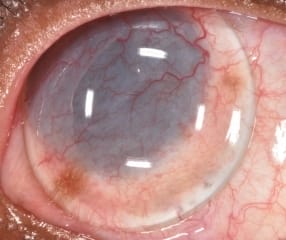
Lasik Complications AdvisoryFormer FDA official calls for end to LASIK "Dr. Morris Waxler (26 years with FDA), The Federal Official who approved LASIK, highlighted on MSNBC, now demanding that the FDA END LASIK!" States, "The LASIK community lied and distorted data to get it FDA approved and that it's got an Adverse Event Rate (permanent injury rate) 20 times (20x) higher than allowed." Lasik Complications are the unanticipated events that can take place months or years after Lasik is done. These complications include but ar not limited to: severe dry eye, irregular, uneven or rough corneal surface, ectasia which is a protrusion or bulging of the cornea, and severe depression. A few of the visual complications include: glare, halos around lights, reduced vision indoors and at night, double and triple vision and distorted vision known as higher order aberrations. Many of the complications that our LASIK patients have experienced have an indirect cause-effect relationship. For example, many patients who have undergone LASIK have experienced retinal-vitreous problems such as retinal and vitreous detachments, retinal tears and floaters months or years after having undergone LASIK surgery. To better understand why these complications can take place due to LASIK, it is best to briefly discuss the procedure itself. The LASIK procedure can be divided into 3 major phases. The first phase involves the creation of the corneal flap with a microkeratome (a very small tool that slices into the cornea). This phase of the procedure requires a temporary but significant increase in the intraocular pressure. The second phase involves photocoagulation with a laser of the stromal bed (the corneal tissue under the flap). The third phase involves the repositioning of the corneal flap. It is during the first 2 phases that the eye is stressed the most. Phase 1: Flap Creation. It is thought that the increase in eye pressure during flap formation creates a mechanical force or stress on the eye which may encourage or enhance damage to the vitreous and/or retinal tissues. According to the manufacturer of the microkeratome, it is believed that the eye pressure has to exceed 65mmHg. to create the vacuum allowing the microkeratome ring to suction onto the cornea. Normal eye pressures average 20mmHg. or less. Thus, LASIK can be thought of as a trauma to the eye in the form of increased intraocular pressure (IOP). Increases in IOP to 100mmHg. have been reported during flap creation. This increase in IOP results in a greater ocular wall tension than some myopic eyes may be able to tolerate. The increased wall tension may cause breaks in the retinal-vitreous membranes and other ocular damage. Phase 2: Photoablation of the stromal bed. The creation of acoustic waves has been proposed as a possible cause of damage to the retina and vitreous. Pulsed ablation of the stromal bed by the laser sets up acoustic stress waves along the axis of the eye. These "shock waves" travel from the anterior segment of the eye to the posterior segment. It is thought that these "shock waves" may be responsible for creating disruptions in the deeper ocular membranes of the eye. Post-Lasik ComplicationsClick Here to read Articles relating to Dr. Boshnick and patients who have experienced vision loss as a result of LASIK surgery Click Here to read Articles relating to Dr. Boshnick and the LASIK industry Click Here to view "Depression, Suicide, and LASIK Complications" Click Here to read "Blindness, Fear of Sight Loss, and Suicide" Click Here to watch "LASIK disaster - Kathy Griffin" Click Here to watch "The Dangers of LASIK - Diane Sawyer ABC" Click Here to watch "3 Years after Lasik laser eye surgery..." The following are just a few e-mails I have received from patients who have experienced vision loss as a result of LASIK surgery: Dr. Boshnick, I'd like to take this opportunity to thank you so very much for everything you have done for me! As you may remember I came to you with very poor vision and little hope. I had undergone Lasik surgery on both my eyes in 1999, with perfect results. I couldn't have been happier that my myopia had been taken care of and was enjoying 20/20 vision. Unfortunately approximately two years later I began to notice trouble with my vision. Things that were once crystal clear were no longer, and I was having difficulty reading, which was something I had never had a problem with. After visiting the Doctor who performed the Lasik surgery, I was informed that I had astigmatism in both my eyes and there was not much that could be done about it other than to start using glasses again. Even with the glasses, however, I still could not achieve sharp vision. After many visits to the Doctor, I was referred to another Doctor who was apparently having success with Intacts. That doctor explained to me that the Intacts were plastic and would flatten my cornea to help with the astigmatism. At that point I was so desperate to see clearly again that I decided to once again undergo surgery, but this time I experimented with just my left eye. Although my vision in the left eye after the Intact had slightly improved, I did not feel it was sufficient enough to merit doing it on my right eye. So again I was in the same situation with poor vision. However, this doctor did tell me that some patients do suffer from this complication as a result of Lasik surgery. That was the first time that I had ever been told that this was a result of my initial Lasik. Finally I was recommended to see you for contacts that may help me with my vision. From the first visit I had with you I immediately felt comfortable and confident you would be able to help me. You were the only doctor to explain my condition to me, and tell me that it was called Corneal Ectasia! I will never forget that you told me that if I was patient with you, together we could find the right contact lens to improve my vision. I must say that I wasn't the one who needed the patience, because at that point I had nothing to loose because my vision was so poor, however your patience with me and the time you took with me was impressive! After several attempts you found the right contact lens for me along with the right combination of glasses. At last I was able to once again see clearly! I cannot thank you enough, because it was not just your knowledge and expertise, but the time, patience and care that you gave me, which is so uncommon in today's medical field. Thank you once again, and please now that if there is every anything I can do for you, please do not hesitate to call! Warm regards, Jorge Vazquez Dear Dr Boshnick: If there is any way that I can help spread the news about the service that you provide to post refractive surgery patients, I am more than happy to do so. A loss of best corrected spectacle vision a after LASIK and other refractive surgeries may be due to irregular astigmatism. THe only effective treatment for irregular astigmatism is RGP's (rigid, gas permeable lenses). These fittings can be particularly difficult because of gross changes in the shape of the cornea with surgery, as well as the iatrogenic induction of various degrees of dry eye. Dr Boshnick is very skilled as an RGP fitter, and I strongly recommend him to any person who is struggling with vision loss after LASIK. As the number of serious, post refractive surgical complications continue to mount, new niche market providers of post surgical lenses are emerging. Dr Boshnick is on the cutting edge of this rehabilitative market, and is acquiring the necessary skills to fit post refractive surgical complications well in advance of his peers. In addition to his skill and competence, Dr Boshnick is a genuinely caring practitioner. He is well aware that some patients after refractive surgery are extremely difficult if not impossible to fit with RGP's, but he is willing to spend as much time as possible with such patients in order to find the best solution for them, even if that solution does not involve a total restoration of vision. His prices are very fair, so no one can ever accuse him of exploiting the wounded. But most importantly, Dr Boshnick is committed to getting the word out about LASIK. In his own words, he is "following the back side of the elephant." He "knows the kind of things that can come out." As a professional whose life and career has been permanently altered by a bad refractive surgery outcome, it is consoling to see a practitioner who gives true informed consent to prospective patients about elective refractive surgery. When patients inquire about LASIK and other refractive surgeries, he tells them the truth in the most powerful of ways. He introduces them to patients in his waiting room. When it comes to LASIK, the best words of advice are BUYER BEWARE!. Mike Mullery I was in glasses full time for nearsightedness at the age of 5. By the age of 11, I was in contact lenses full time. About age 26, I was have severe problems related to the contact lens use and was having trouble being fitted. I was referred to a Corneal Surgeon for an evaluation. This was in the mid 90's prior to Lasik. I saw Dr. Stanley Rous. He started with ALK in both eyes. Followed shortly after by RK in both eyes and then RK enhancements in both eyes. Although my vision was not 20/20, I was able to see (with glasses) 20/25 with both eyes for approx 2 years. Early 2000, my surgeon (Dr. Rous) convinced me that Lasik was my answer to getting rid of my glasses. I was 30, single and vain. I could no longer wear contacts (after all of the surgeries) and wanted to get rid of my glasses so I followed the advice of my surgeon. He never did an Orbscan on me prior to my Lasik surgery and proceeded with both eyes. After my Lasik I was seeing about 20/25 without glasses. That lasted about 6 months. My vision slowly declined and I was back in glasses full time within the year. My night vision was completely gone. My vision stayed stable (during the day) for about 4 years. Then my vision started to decline again. I went back to my surgeon and he sent me for an Orbscan (my first one ever) and diagnosed me with Keratoconus secondary to all of my surgeries (which he performed). He then told me that my vision can no longer be corrected with glasses. He referred me to another Corneal Surgeon for possible Intacs or Corneal Transplants. I saw the new surgeon and multiple other corneal surgeons in the next several months (including the chief of Corneal Surgery at Bascom Palmer in Miami). All of the surgeons shared the same opinion, none of them would touch me. They all said I was "too high risk for any surgical procedures due to all of the scar tissue" from my previous surgeries. I was sent to see several contact lens specialist that treat Keratoconus. None of them were successful. I went to see the contact lens doctor at Bascom Palmer......Dr. William Weingard. Not only did he not help me, his demeanor with me was so poor that I left there crying after each visit. I called him once from the road struggling to see with the new contacts he fit me with and he told me "what do you expect me to do, I'm not God, you need new cornea's". After 2 more years, I finally decided to give Dr. Bosnick a try. I've been his patient for about 6 months now. He had been extremely patient, sympathetic, and understanding with me. He is the only doctor that hasn't "thrown in the towel" with me in 7 years. He has fitted me with Sclera lenses. They are still not perfect in the comfort department, but I'm seeing 20/20 with them! It's a miracle for me. The other night my 12 yr old was at her friends house and I was able to drive to her friend and pick her up. I didn't even know how to put the headlights on (I never had used them). It was such a tremendous accomplishment for me to be able to pick up my daughter at 9 pm. Sad, but true. I'm so excited about finally seeing. I'm turning 40 this year and it's the best year of my life thanks to Dr. Bosnick. I am forever grateful for his brilliance and compassion. Regards , Jami Sorren Dear Dr Boshnick, I cannot tell you the nightmare this has been and like others you probably heard, life is no longer the same and except for my family I would give anything in the world to regain the vision I had back. Being fearful of dim lights and having to think about where I am going is just not a quality life. The lasik doctors seem to have forgotten that because you can read 20 20 on the chart does not mean you have quality vision and it's definitely not a success story. It's disheartening and adds to the pain that these doctors don't seem to want to hear about your problems and only rush you out the door. The world as I remember is no longer the same and all those beautiful things I used to take for granted only exist in memory. It's ironic how now I try to find solace in sleep only to wake up to a nightmare. Becoming a prisoner in your own body is the worse feeling to have and leads to desperation in search for an answer. I'm sorry to vent to you and I'm sure you have heard this many times from other patients. It just seems like a strange world we live in when doctors like yourself have to fix the mistakes of others. We can only be grateful that doctors like yourself can give us encouragement and optimism and show us that there is a light at the end of the tunnel. I truly look forward to meeting you and pray that there's an answer to this. Sincerely, Robert Dr. Boshnick, My name is Bill, and I'm a victim of post lasik ectasia in my left eye. Dr. Trattler game me your email, and said you're the best contact lens specialist. I hope you don't mind if I ask you a couple questions. I've been trying contacts for the past few months. I get the best vision and comfort with B&L Purevision (plano, -1.75 cyl., 110 axis), but it started irritating my eye more and more as time went on. I got about a month or so before I got to a point that I refuse to put it in my eye. I've tried Acuvue Advance toric, B&L toric 66, Frequency 55, and the Purevision. Most of them burn and irritate my eye within a couple hours. I use to wear the older daily wear lenses all day without a problem, so I'm not sure what happened after lasik. I was recently told that I have clogged glands in both my lower eye lids. I was tested for the amount of tears, and that seems fine. The optometrist that mentioned clogged glands is in Cleveland, and I was only there to discuss intacs so I didn't pursue it. I started Thera Tears omega3 a little over 2 months ago, but haven't noticed a difference. I haven't been prescribed restasis, because I was told it takes a few months to start working. I haven't tried the hard GP lenses since vision isn't the issue, and I don't see how they would be more comfortable that a soft toric. Any suggestions on what to try next, or even a good optometrist in the Pittsburgh area that you would recommend? Thank You for your time. Bill I had better luck with lenses today than yesterday. The vision with the lenses is truly spectacular. I'm seeing 20/15 or maybe better with these lenses in each eye. The night vision is more or less perfect, too. Not quite what it was before LASIK, but just about. I have an eyechart here at home...I'll test my vision against the 20/15 and 20/10 lines and let you know. I wore the lenses about 7 hours today...I don't know what RGP lenses should feel like, so it's hard for me to distinguish discomfort caused by dry eye from discomfort caused by anything else. I never wore RGPs before LASIK, so I have no norms...no idea how they should actually feel. However, I think most of what I'm feeling is coming from the impression ring created by the lenses, which means it's just a matter of building wear time. Somewhere around the 5th hour the corneal irritation became significant in the right eye, because the vision started to become more dull and kind of declined. Then, when I removed the lenses, I had a lot of haze in the right eye and some spectacle blur that cleared up in a couple of hours. Left eye was fine. Another week should bring more adaptation, so let's see what happens...it's going to be very hard to give up this vision. This is the best vision I've had with RGPs since my surgery. :) Thanks for sticking with me and Mike and trying to help us. :) Raj I was a research clinical psychologist before LASIK. I was told that I'd have two days of eye strain, and then I'd be seeing great. Since I was the so-called "perfect candidate," I was led to believe that unless something went horribly wrong, there was no risk. Just pick out an experienced doctor, and things would be great. After LASIK, I immediately had terrible double vision in my right eye. I had to move back in with parents for a year because my eyes just completely dried out. A good night's sleep became a thing of the past. I woke up in pain every single night for the first year or so. Some days I was lucky to see across the room. I have never completely recovered. My vision is distorted somewhat every single day. Sometimes it's good enough to read and get some quality work done, and sometimes it isn't. I've since communicated with over a hundred people who've told me that they've considered suicide because of their LASIK outcome. They're all over the United States. Many thought they had the best doctors. I know I did.I did my homework, didn't go to a LASIK mill, interviewed three surgeons, and finally picked who published a major text on post-LASIK complications. Only the best for my eyes, I thought. It still went horribly wrong. All of the people I've communicated with have similar stories to tell...the vast majority of those stories feature some element of deception, which in turn drives the develop of post-traumatic stress disorder, depression, and suicidal ideation in these patients. You'll see a lot of positive information posted on the internet about LASIK. Unfortunately, most of the people I know with complications don't want to speak out. I can't really blame them. They know that if they attach their name to an anti-LASIK message that tells the truth about their bad vision, it could show up in a Google search, and affect their future opportunities for hiring and job promotions. And it's true.most employers are not looking to give some individual with a handicap a chance at gainful employment. Instead, the employee with LASIK complications represents an unknown who could accumulate days of missed work and might never perform up to par. With life being as competitive as it is, employers are looking for any basis to weed out applicants. The same is true of people with PhDs and MDs who've been injured by LASIK. These are people who've spent years educating themselves to work in their profession. They're very afraid that speaking out about LASIK complications could affect their future opportunities. And besides, who wants to have their misery recorded on the internet for all of posterity? Who wants to display their suffering in public? Not me. What I learned from LASIK is that modern doctors are as much entrepeneurs as healers, and that when money talks, it is really hard for some of them to give advice that's in the patient's best interest. That's why you can't believe the marketing, that's why you should be suspicious of complication rates, and that's why you should never trust a refractive surgeon. I'm certainly sad to come to that conclusion...it doesn't sit well with me or with my general philosophy of life. As a psychologist, I've always felt that development of a capacity to trust one's fellow human beings is fundamental to one's "growth as a person" (and to one's spiritual growth). But...having witnessed the deception reported by the patients I've communicated with, knowing that their stories all converge, and having been the victim of that deception myself, I think its simply best if consumers avoid refractive surgery and keep their glasses. All I can say is: Talk to a hundred different patients with complications who are telling you the same story about a hundred different doctors and see what your conclusion is. I also hear that the "new LASIK" is better than the "old LASIK." Maybe it is...but it was the "old LASIK" that was approved as safe by the FDA and aggressively marketed to the public. Admissions of problems with the "old LASIK" only serve to further undermine my faith that manufacturers, doctors, and the FDA can really determine what is safe and what is not. And anyway, the people selling the new LASIK are the same ones that sold us the old LASIK, something that causes those already injured to wonder, "When can we ever believe them?" Sincerely, Roger D. Davis, PhD Miami, FL Dr Boshnick I had a bad lasik outcome 2 months ago. Im sending my corneal topography for your pre evalution. Could you please make a pre diagnost of the result of my surgery. Do i have irregualr astigmatism? I'm having distortion and starbursts. Am i a canditade for RGP Synergeyes PS? Does it work eliminating distortion and starbursts? Do i have to wait corneal healing? How much cost and how long it takes if i go to the US for contact lenses adaptation? Thanks Flavio Hello Dr. Boshnick, Thanks for your e-mail and I hope you and your family had a great holiday season. I'm doing very well with my Synergeyes lenses, definitely very comfortable, and many times I don't even feel the lens inside my eye (which I thought it would never be possible to accomplish with a hard contact lens). Even though my vision quality is not what I would hope for (still see a bit of ghosting and double vision), the vision quality with this lens is definitely much better than all the other lenses we've tried in the past, and obviously, considering the current condition of my cornea, I'm very grateful that with your incredible support and caring, I have been able to stabilize my vision as much as I'm sure is humanly possible with today's technology. After many years of suffering from Post Lasik Ectasia, and many months of working on different contact lens fittings, I would recommend any of your patients suffering from a similar condition to give the Synergeye lens a try, as I am walking prove of the benefits that this lens, along with your expertise, can potentially provide to others. On a side note, I've been very frustrated and a bit depressed about the fact that about a week ago I suffered an eye infection (and conjunctivitis) in my good eye apparently due to a small foreign object that got embedded under my eyelid, I went to the emergency room where they removed a small particle and gave me some antibiotic, and anti-inflammatory drops. After over a week of this, my vision quality in my good eye has weakened tremendously, and I now see ghosting, halos, along with close and far blurred vision. As you're aware, I been able to function properly all these recent years primarily because the health of my good eye has always been very good (20/20), however, the symptoms that I'm now feeling in my good eye definitely feel like the beginnings of corneal ectasia. If this is the case, I'm not sure how I'm going to live on, I can't imagine living a functional live with both eyes affected with ectasia. I'm trying incredibly hard to not let this situation get in the way of my work, however, I'm very afraid that everything that I've worked so hard to accomplish, both professionally and personally, can very easily be taken away from me as my vision quality continues to worsen. I'm thinking about consulting with a Cornea specialist here in Singapore, however, I can't imagine anyone topping the support or expertise that both you and Dr Trattler have provided me with. I'm also concerned about their current knowledge and experience treating similar cases, and therefore I'm not very positive about any real accomplishments. I hope more than anything that the condition in my good eye is not related to ectasia, and that it can easily and safely be stabilize once again. Thanks again for all your support and caring, I can't tell you enough how much it means to me. I don't have any immediate plans to travel to the US, however, I will arrange to see you and Dr Tratller as soon as I get a chance. Thanks again, and best Regards, Gabriel Dear Dr Boshnick, I cannot tell you the nightmare this has been and like others you probably heard, life is no longer the same and except for my family I would give anything in the world to regain the vision I had back. Being fearful of dim lights and having to think about where I am going is just not a quality life. The lasik doctors seem to have forgotten that because you can read 20 20 on the chart does not mean you have quality vision and it's definitely not a success story. It's disheartening and adds to the pain that these doctors don't seem to want to hear about your problems and only rush you out the door. The world as I remember is no longer the same and all those beautiful things I used to take for granted only exist in memory. It's ironic how now I try to find solace in sleep only to wake up to a nightmare. Becoming a prisoner in your own body is the worse feeling to have and leads to desperation in search for an answer. I'm sorry to vent to you and I'm sure you have heard this many times from other patients. It just seems like a strange world we live in when doctors like yourself have to fix the mistakes of others. We can only be grateful that doctors like yourself can give us encouragement and optimism and show us that there is a light at the end of the tunnel. I truly look forward to meeting you and pray that there's an answer to this. Sincerely, Robert
Dear Dr. Boshnick: Thank you so much for speaking on the phone with me today about scleral lenses and the reality of post-refractive surgery care for people with unsuccessful outcomes. I agree with you that there are many more LASIK and PRK casualties than the eye surgeons and surgery centers want the public to know about. I never thought it would happen to me, but I know there are many others with eye trauma that is similar or even worse than I have...in fact, I consider myself lucky, even though my eyes are severely and permanently damaged from PRK. You talked about people suffering major depression post-LASIK...I was depressed for a long time about my eyes and cried often...I also suffered panic attacks. I would be more depressed if my eyes hadn't recovered to the extent they did, especially my right eye, which allows me to function without contacts to a large extent. But I will always have moments of sadness and anxiety about the condition of my eyes. When RGP lenses were prescribed for me a year ago at Johns Hopkins Wilmer Eye Institute, I was concerned about possible irritation or injury to my fragile corneas, but was told that my eyes would get plenty of oxygen and the lenses would not bother my eyes. I asked about scleral or SynergEyes options, but those were quickly dismissed and explained as only necessary for the worst eye cases, difficult to remove, and not allowing as much oxygen to the eyes. Initially I wore the RGP lenses every day, sometimes 12 hours or more, but then gradually reduced wear time because they were not comfortable or convenient, and for the last few months I have mostly stopped wearing them except when necessary to drive or see clearly. My eyes feel so much better without them, and now that I understand from you that they can cause friction and irritation or even damage (which I suspected from the beginning), I will only wear them when absolutely necessary and just deal as best I can with having vision like an impressionist painting. I hope I have not caused any damage to my eyes, or lost any potential healing results, due to wearing RGP lenses. I found this article when searching for information on Dr. Breece: http://www.newsobserver.com/689/story/721249-p2.html The number of post-surgery patients who need special lenses is increasing...and these people are slowly making themselves heard. I hope that more insurance companies will start to cover the cost of these specialty lenses, because they are medically necessary. I am eager to meet with Dr. Breece and be evaluated and hopefully fitted for scleral lenses. I called his office to make an appointment and am waiting for a return call. I made sure to mention that you referred me. Thank you for caring for people with LASIK/PRK damaged eyes...your work is so important and makes such a tremendous difference. I know that all of your patients are grateful for how you have helped restore functional vision, when they had lost all hope and didn't know where to turn. I had no clue where to go until you referred me to Dr. Breece, and I'm glad that such a rare specialist is so close to me (an hour's drive away). You also helped me see the big picture, in terms of why so many people who could benefit from scleral or SynergEyes lenses are unaware of these valuable options. I figured that Johns Hopkins would have steered me in the right direction, but now I understand that is not the case. Lastly, thanks for warning people not to get LASIK, or any surgical vision correction procedure. Having PRK is the one decision in my life I wish I could take back. Have a great New Year! Sincerely, Diane Troell P.S. I'm glad you included "vitreous floaters" in your list of post-surgical symptoms - I have very noticeable and disturbing vitreous floaters that were not present before I had PRK and which I attribute to the surgery. These large, odd amoeba-like shapes and lines in my vision are one of the most distressing symptoms to me, especially because I know that I am condemned to see them forevermore. Dr. Boshnick: I have an appointment on Wednesday, January 2 with Dr. Breece, and I'm really looking forward to it. I haven't worn my RGP lenses in exactly a week. I'm very diappointed that John Hopkins didn't pursue alternative contact lens options with me, but only presented RGP as the optimal lenses. Not knowing any better, and fully trusting their expertise, I just went along with what they prescribed for me, although I did ask about both scleral and SynergEyes. I could have been wearing either of those options for the past year, instead of the uncomfortable and potentially harmful RGP. Please feel free to post my email on your website...if I can help others, I am happy to do so. You might want to include this article link - it has more detail than the one I provided: http://seattletimes.nwsource.com/html/health/2003941235_lasik11.html The article is called "Eyeing the Risks of LASIK Eye Surgery" from the 10/11/07 Seattle Times. There is also the "lasiksucks4u" website, which has a lot of good information, links, and testimonials. I haven't checked it in a long time, but I presume it's still up. I've talked to the man who runs it - he's very nice. If you'd like, I can update you after my appointment with Dr. Breece. In my opinion, you're a very special person, too. Happy New Year! Best regards, Diane Troell
Dear Dr. Boshnick, I just want to thank you for all your help with my sister. The nightmare began on Dec 21, 2006 after she receivied bad lasik surgery. My sister has Rheumatoid Arthritis and has also had RK surgery on her eyes but was approved for lasik. The doctor told her she would be fine and all she may need was reading glasses. Well, that was not the case. her vision was horrible. She was seeing blur, glare, starburst, halo and not to mention the distortion-multiple, triple images. She would see up to eight moons at night. She went from being a normal person to nothing. She could no longer read, drive, see to fix her hair or makeup, do much of anything. She could not escape this because it was all she could see. She also had to give up being the PTO President at her son's school. This changed her life totally. She felt totally useless and was afraid to do anything because of how she was seeing. This affected her mind in such a way she no longer wanted to live. She could not go to her son's football games at night because all the lighting, people, everything looked horrific. She decided it would be better to die than live this way. We, the family had to be with her 24 hrs a day to try and keep her from killing herself. She did not want to eat and begged us to leave and let her die. She lost about 45 lbs and was nothing but skin and bones. We had her to the hospital several times for dehydration. She was also in and out of mental hospitals 5 times due to the impact this had on her mind. The family was devastated, we felt we had lost her, her husband did not have his wife, her son did not have his mother, our mother did not have her daughter and I had lost my sister. I had searched everywhere for help for her. We had took her to several eye doctors where she was told standard lens or glasses would not correct her vision. They also did not recommend anymore invasive surgery and we knew physically or mentally she could not handle that. After, much search on the internet I found a website with other poor people going through some of the same things. I found very many helpful people and also found out about two doctors who I thought could help my sister. One was in Ft. Lauderdale who I emailed that was very helpful and thought he may be able to help her with a Z wave lens. We got her there and he was great but the Z wave did not work for her due to her dry eye and it resting on her cornea. She was back home feeling even more hopeless and wanting to die and then back to the hospital. I had also emailed another doctor who is in Miami who thought he could help her with a Scleral lens. After getting out of the hosptial again after 6 weeks we got her to Miami where she met Dr. Edward Boshick. He has been wonderful from the start. He was very caring, undersanding and went out of his way to help her. He made her a Scleral lens which has changed her life. She can now function again and has her life back. We are ever so greatful the nightmare is over and to have her back thanks to the prayers and Dr. Edward Boshnick. Dr. Boshnick, I would like to thank you for your help in fitting the new Synergeyes post-surgical lenses. Going from not being able to see anything clearly with my left eye, and being quite farsighted with my right eye, to the vision I currently have, is amazing. Prior to these lenses, the constant migraines that plagued me from the difference in prescription, as well as the constant blur, became a part of my daily life. Not solely a refractive error, but the higher order aberrations, even in my “good eye”, made using glasses for my one farsighted eye, useless. Being a dental student, I shudder to think how close I was to ending my life. Taking eight courses and studying for a national licensing exam with one, semi-functional, eye was a hellish nightmare that I was very close to not surviving. After just one fitting for the Synergeyes lenses, I am able to function once again! My eyes are functioning together and I am able to do my work. With my surgical loupes, I am able to prepare for crowns, do post and a core’s, and even root canals, which any good dentist would say, requires great vision. Both you , and Synegeyes, have allowed me to, once again, plan for my future, rather than my end. I hope that you able to help many more people with this product. With Respect, Vlad Botezatu (future DMD) 1. How old are you? I was 36 when I had LASIK. >> Get facts on other eye conditions like ambloyopia (lazy eye), astigmatism, or hyperopia and related farsightedness information. |